Ask a room of parents when a child should get a first haircut and you will hear rules about birthdays, thickness, and luck, most of them inherited rather than true. The practical answer in Statesville is simpler: a first cut makes sense when the hair is in the child's eyes, tangling at the back, or growing so unevenly that it always looks untidy, whenever that happens.
This guide sorts the common claims into true, false, and it depends, because first-haircut advice mixes all three. What matters at Forest Heights Barber Shop, or any shop, is a rested child, a short appointment, and parents who treat the whole thing as ordinary. Children take their cue from the adults in the room.
The claims about timing
The claim that cutting hair makes it grow back thicker is false. A cut changes the feel of the ends, because a fresh blunt end feels coarser than a tapered baby hair, but it does not change the follicle or the number of hairs. Waiting for thickness before a first cut is waiting for something the cut itself cannot cause.
The claim that every child should wait until age one is also a rule without a basis. Some babies have hair over the ears at five months; some toddlers are nearly bare at eighteen months. Hair amount, not the calendar, decides. The related claim that an early cut ruins curls is an it-depends: baby curls often relax as hair grows and new hair replaces the first growth, cut or no cut, so the change gets blamed on the scissors unfairly.
| Common claim | Verdict | The real story |
|---|---|---|
| Cutting makes hair grow back thicker | False | Fresh blunt ends feel coarser; follicles and hair count do not change |
| Wait until the first birthday | False | Hair amount decides timing, not age; some babies need a tidy at 6 months |
| A first cut will ruin baby curls | It depends | Baby curls often relax with growth anyway; the cut gets the blame |
| The child must sit perfectly still | False | Barbers work with normal wiggles and pause when needed |
| Clippers are too scary for a first cut | It depends | Some children prefer quiet clippers to scissors near the ears; the barber will judge |
| A bad first experience matters | True | Calm and short beats complete and upsetting, because the routine repeats for years |
What the first visit actually looks like
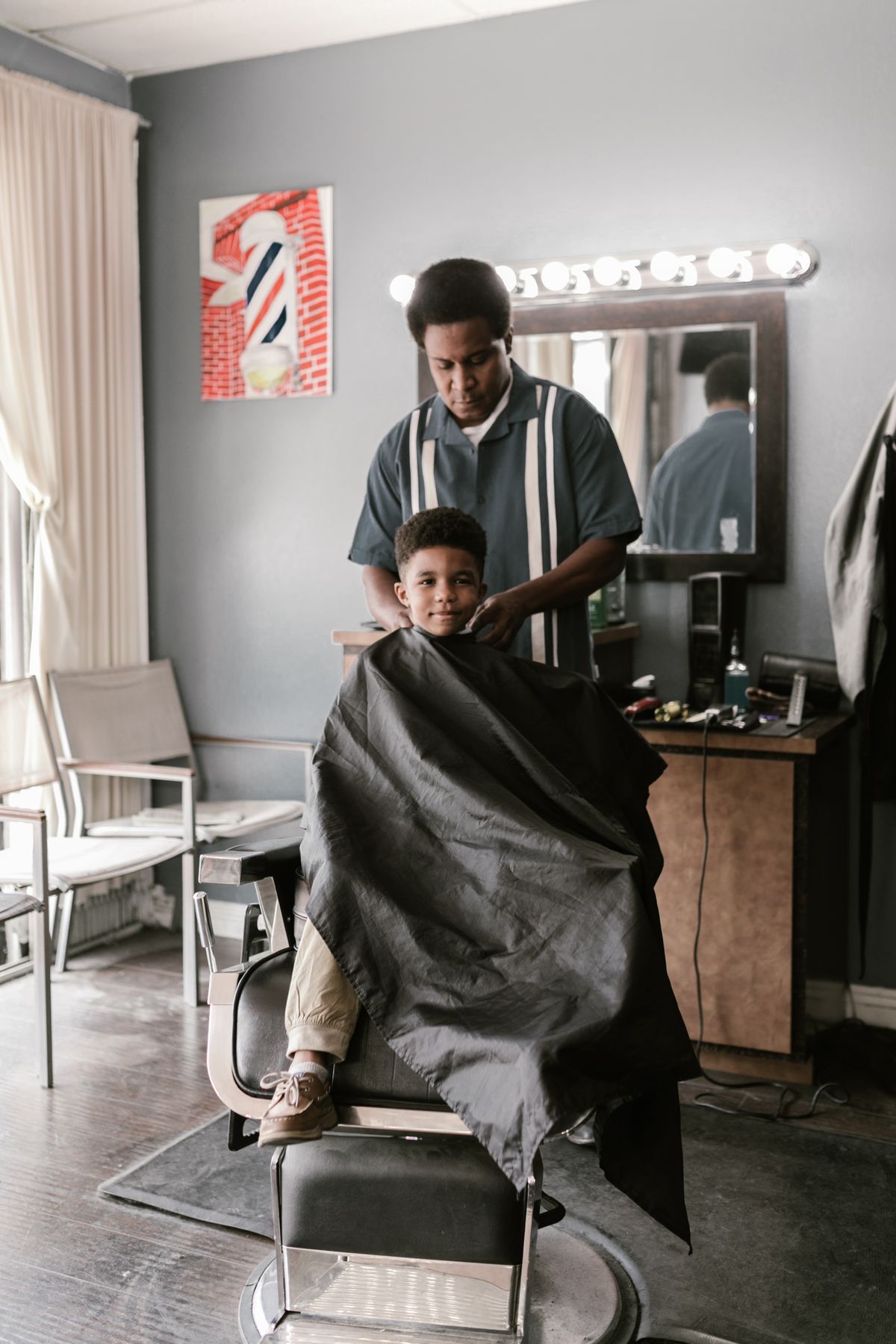
A first appointment is short and deliberately undramatic. The child sits in the big chair, sometimes on a booster, wearing a cape if they tolerate it. The barber works with scissors or quiet clippers, tidying the hair over the ears, the fringe, and the back, and stops at tidy rather than perfect. Expect ten to twenty minutes, with pauses.
Bring a small snack for afterward, a change of shirt if loose hair will bother your child, and schedule mid-morning or whenever your child is naturally at their best. Avoid the hour before a nap or meal. If the visit goes sideways halfway, a decent barber will call it done at whatever tidy point you have reached. A half-finished but calm first visit beats a completed traumatic one, because there will be many more visits.
Preparing without making it a production
Talk about the haircut plainly for a day or two beforehand: you will sit in a tall chair, wear a cape like a superhero, and the barber will make your hair shorter. Let the child watch your own haircut first if timing allows. Avoid warning language about being brave or sitting perfectly still, which announces that something difficult is coming.
Skip the screen-time negotiations and big reward promises. A calm, brief errand with a parent who acts like it is a trip to the store teaches the right lesson. Many families take the classic photo and keep a small lock of hair, and barbers are used to both. Just mention the keepsake before the cutting starts, not after the hair is already swept up.
Keeping it up between visits
A good barber visit runs on information. Tell the barber how long it has been since the last cut, what you have been doing at home, and what has been bothering you in the mirror. That short conversation saves guesswork. Most disappointments in the chair come from a vague request, not from bad cutting, and two minutes of plain talk at the start prevents weeks of growing out a misunderstanding.
Tools matter less than condition. Clippers, scissors, and razors all do poor work when dull or dirty, which is one reason a shop cut holds its shape longer than most home attempts. At home, keep any trimmer clean, oiled as the maker directs, and stored dry. If a home fix starts to involve correcting a correction, stop. A barber can level almost anything that still has length, but very little that has been cut too short.
Common questions
What if my child will not wear the cape?
Then the cut happens without it. A towel, a parent's lap, or simply brushing hair off afterward all work. The cape is a convenience, not a requirement, and no barber will force it.
Should both parents come?
One calm adult is usually better than an audience. Extra family can watch if the child is relaxed, but a crowd of encouragement can raise the temperature of a small appointment.
How much hair comes off at a first cut?
Usually very little: the fringe, over the ears, and the wispy back. The goal is tidy and even, keeping the baby look while removing the parts that tangle or fall into the eyes.
Photos in this guide are representative stock images.
← All guides from Forest Heights Barber Shop← Back to Forest Heights Barber Shop