Every head has a swirl at the crown, most have a cowlick somewhere along the hairline, and nearly everyone has one spot that refuses to match the rest. These are not flaws or bad hair. They are growth patterns, set before birth, where the follicles angle out of the scalp in a direction the hair then follows for life. At Forest Heights Barber Shop in Statesville, half of fixing a frustrating cut is mapping those directions before cutting anything.
A cowlick cannot be trained away permanently, cut away, or flattened with enough product. It can be worked with, by choosing lengths and shapes that use the growth direction instead of opposing it. The seasonal angle matters too, because humidity, length changes, and hat season all change how strongly a pattern shows itself through the year in North Carolina.
Reading your own map
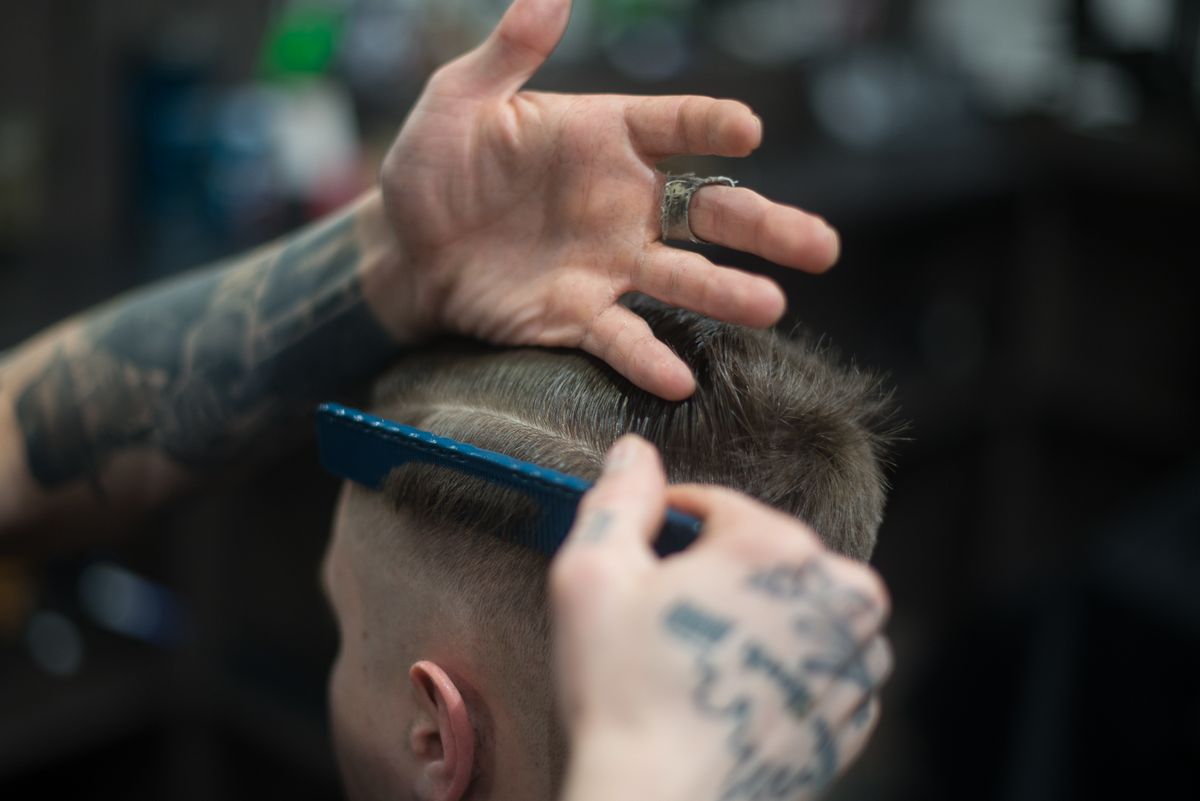
Find your crown whorl first, in a mirror with a second mirror or a phone photo. Hair spirals out from that point, which is why the crown stands up when cut too short: the hairs there are pointing in every direction at once, and short pieces have no weight to lay them down. A little more length at the crown, or a cut that follows the spiral, settles what brute force cannot.
Along the front hairline, look for the spot where hair changes direction sharply, often sending a fringe sideways or splitting a part in an unwanted place. That is your main cowlick. Parts placed a half inch to either side of it frequently behave, while a part placed exactly against it will fight you every single morning. Your barber can find these points in seconds with a comb and water. Ask them to show you, so your home styling works with the same map.
Growth-pattern check, season by season
- Spring: before the short cut, point out your cowlick and agree how short it can go
- Spring: move any part to sit with the natural fall, not against it
- Summer: watch the crown in humidity; add length there next visit if it stands
- Summer: rinse sweat out rather than layering more product over it
- Fall: reassess as length returns; weight may let you try the style that failed in July
- Winter: dry hair fully before hats, and reset the crown with damp hands after
- All year: style in the growth direction first, and only then judge whether product is needed
Cutting with the growth
The working rule is simple: hair that wants to go one way should be cut to be worn that way, or left long enough that weight overrides the urge. Short hair at a cowlick springs up because short pieces are all spring and no weight. Either very short, buzzed into submission, or clearly longer are the two stable choices. The middle length, where the hair is long enough to lift but too short to lie down, is the trouble zone most men live in by accident.
Direction also decides parts, fringes, and fade placement. A side part aligned with the natural fall looks sharp with no product. A fringe swept in the direction the hairline already grows needs almost no effort. Fighting cuts can look fine leaving the shop, where the barber used heat and tension, then collapse by the next morning at home. If a style only works in the chair, the pattern won.
When patterns show up most
Summer exposes growth patterns in Statesville. Humidity lifts hair at the whorls, sweat flattens the cooperative parts, and the contrast between the two becomes obvious. Shorter summer cuts also remove the weight that was hiding a cowlick all winter, which is why a spring cut sometimes seems to create a problem that was there all along.
Winter hides patterns under length but adds hat friction, which twists hair at the crown into the hat's own arrangement. The answer in both seasons is the same: agree the cut with the map at the appointment, then keep home styling minimal and in the growth's own direction. Ten seconds with damp hands, pushing hair the way it wants to go, beats five minutes of product pushing it the other way.
Keeping it up between visits
Tools matter less than condition. Clippers, scissors, and razors all do poor work when dull or dirty, which is one reason a shop cut holds its shape longer than most home attempts. At home, keep any trimmer clean, oiled as the maker directs, and stored dry. If a home fix starts to involve correcting a correction, stop. A barber can level almost anything that still has length, but very little that has been cut too short.
A good barber visit runs on information. Tell the barber how long it has been since the last cut, what you have been doing at home, and what has been bothering you in the mirror. That short conversation saves guesswork. Most disappointments in the chair come from a vague request, not from bad cutting, and two minutes of plain talk at the start prevents weeks of growing out a misunderstanding.
Common questions
Can I train a cowlick to lie flat?
Briefly, with heat, brushing, and product, but not permanently. The follicle angle does not change. The durable fix is a cut that either goes very short at that spot or leaves enough length for weight to win.
Why does my crown always stick up after a short cut?
Hair at the whorl points in all directions, and short pieces spring upright. Leaving the crown slightly longer, or following the spiral with the cut, usually settles it within one appointment.
Does hair grow in the same pattern everywhere?
No. Most heads have one main whorl, but double crowns and multiple cowlicks are common. Your barber maps them during the consultation, which is why the first visit at a new shop deserves an extra minute of talking.
Photos in this guide are representative stock images.
← All guides from Forest Heights Barber Shop← Back to Forest Heights Barber Shop