Thinning hair punishes two instincts: growing it longer to cover more ground, and keeping the style you wore at twenty-five unchanged. Both backfire for the same reason. Thin coverage spread over a longer length separates and shows more scalp, and an old style assumes hair that is no longer there. At Forest Heights Barber Shop in Statesville, the work is the opposite: shorter, textured, and planned across the year.
Think of it as a calendar rather than a single rescue cut. Hair thins gradually, and the men who handle it best adjust in small steps each season, so no single haircut ever looks like a dramatic announcement. The principles stay constant while the lengths shift: keep the sides tight so the top reads fuller by comparison, add texture so hair supports itself, and style forward or natural rather than slicked back.
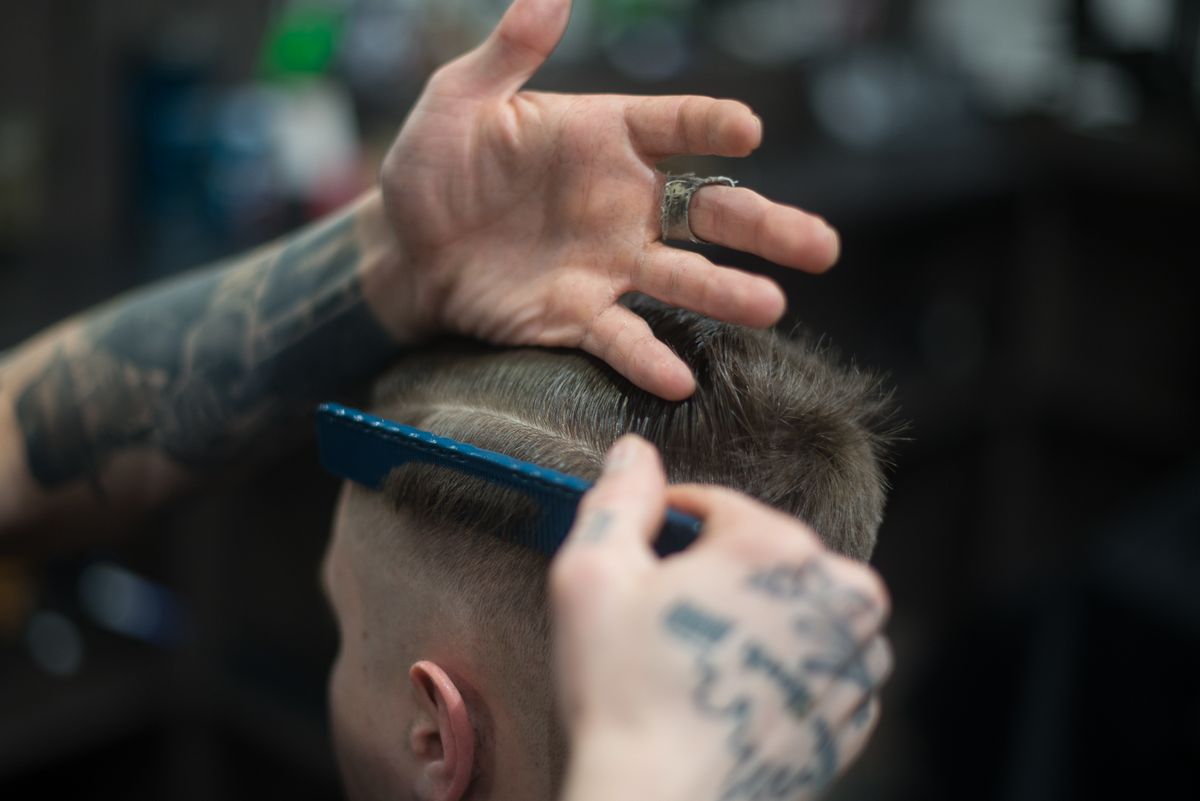
The core principles
Contrast is your friend. When the sides are kept short and tidy, the eye reads the top as fuller relative to them, even at the same density. Letting the sides grow to match a thinning top does the reverse, blending everything into one thin-looking mass. This is why a shorter, well-blended cut almost always reads thicker than the longer version of the same head.
Texture is the second tool. Point-cutting and light layering break the top into pieces that lean on each other instead of lying flat in one sheet. Flat, uniform hair shows the scalp through its gaps. Textured hair overlaps like shingles and covers better at the same actual density. Styling follows the same logic: matte products, applied sparingly to dry hair, keep the pieces separated without the wet clumping that exposes skin.
| Season | Adjustment | Reason |
|---|---|---|
| Spring | Top one step shorter, texture refreshed | Sets the shape before humidity tests it |
| Summer | Shortest version, visits every 3 to 4 weeks | Sweat and humidity flatten and separate thin hair |
| Fall | Honest review against recent photos | Catches changes at the crown and hairline early |
| Winter | Slightly more length allowed, sides stay tight | Dry air gives lift, but contrast still does the work |
A year of small adjustments
In spring, take the top a step shorter than you wore it in winter and test the new length before summer humidity arrives. Summer in North Carolina is when thin hair suffers most: sweat and humidity flatten it and separate it. A shorter summer version, kept on a three-to-four-week cycle, holds up far better than fighting the weather with product.
Autumn is the honest review. Compare how the cut looked in this year's photos against last year's, and let the barber shorten or reshape based on where coverage has actually changed, usually the crown and hairline first. Winter allows a fraction more length since dry air gives hair more lift, but keep the sides disciplined. Across all four seasons, the rule is small moves early rather than one large correction later.
What to stop doing
Stop parting and combing long strands across thin areas. The comb-over announces itself through the gaps between strands and moves in wind, and everyone has seen it happen. Stop using heavy, shiny products that glue hairs into a few separated ropes. Stop avoiding the barber: men embarrassed by thinning often stretch appointments, and overgrown thin hair looks thinner than the same hair kept short and tidy on schedule.
Also be honest about the endpoint. For some patterns, the strongest answer eventually is a very short buzz worn with confidence. A good barber will raise it when the remaining options start requiring more effort than they return, and that conversation, handled plainly in the chair, is a service rather than a sales pitch.
Keeping it up between visits
At home, less is usually more. Wash when the scalp needs it rather than on a fixed daily habit if your hair runs dry, rinse well, and keep product amounts small. A pea-sized amount worked through dry or slightly damp hair does more than a large amount dumped on wet hair. If a style needs ten minutes of work every morning to look right, it is the wrong style for most weekdays, whatever it looked like leaving the shop.
Photos help, with one caution. A reference picture shows the destination, but your hair type, growth pattern, and hairline decide whether that destination is reachable. Bring two or three photos rather than one, ideally of hair similar to yours. A barber can then point to the parts that will transfer directly and the parts that will need adapting, before any hair comes off.
Common questions
Does buzzing it all off always look better?
Not always. If coverage is still moderate, a short textured cut usually reads fuller and softer than a full buzz. The buzz becomes the right answer when the contrast between remaining hair and bare areas gets stark.
Can products really make a difference?
Yes, within limits. A matte product on dry hair, used sparingly, keeps textured pieces separated and covering. Heavy or shiny products do the opposite and are the most common styling mistake.
How do I bring it up with my barber?
Directly. Say the thinning bothers you and ask what they would do at the current stage. Barbers see every stage weekly and will usually be relieved to work with it openly rather than around it.
Photos in this guide are representative stock images.
← All guides from Forest Heights Barber Shop← Back to Forest Heights Barber Shop